7-27 November 2026
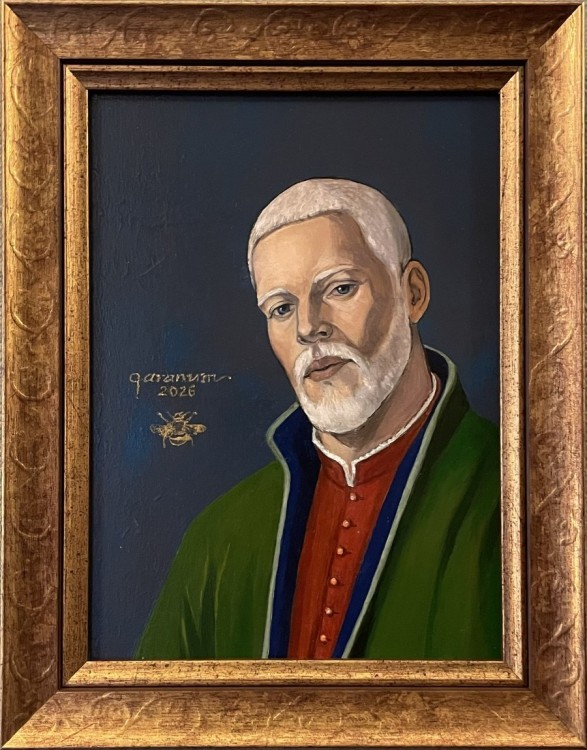
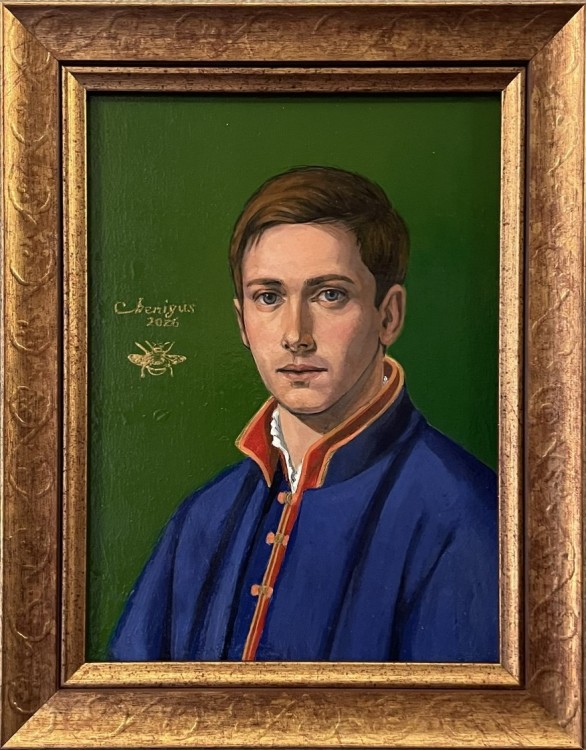
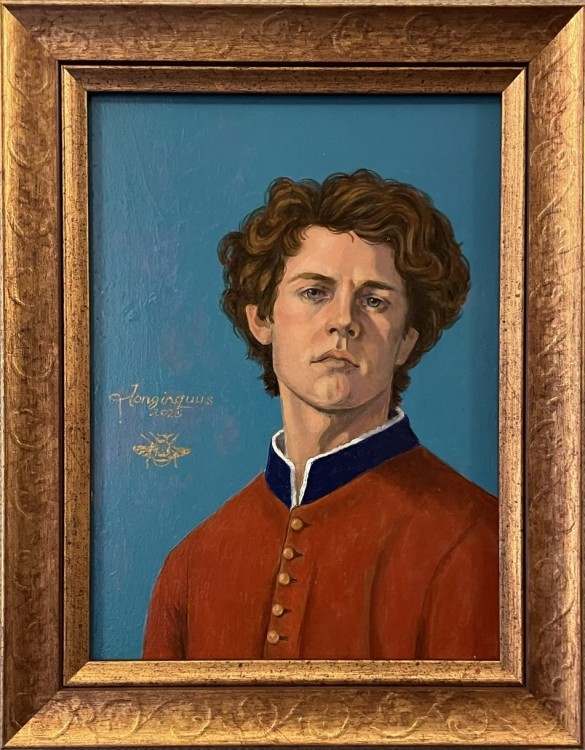
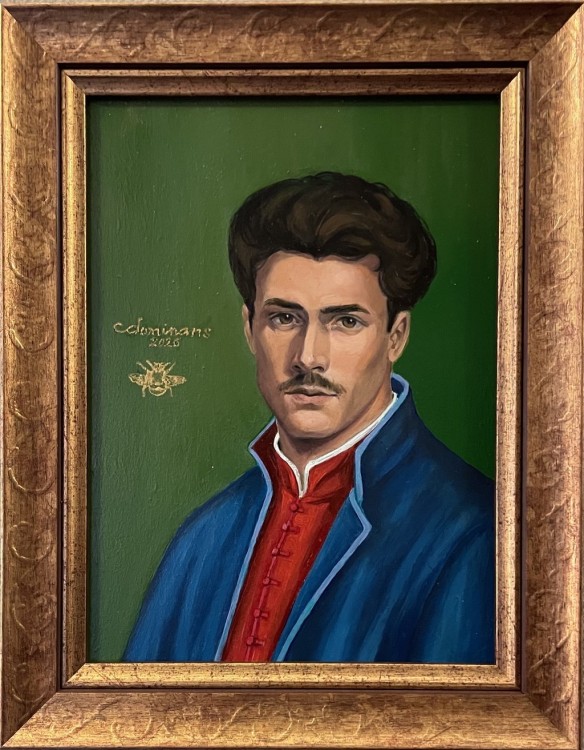
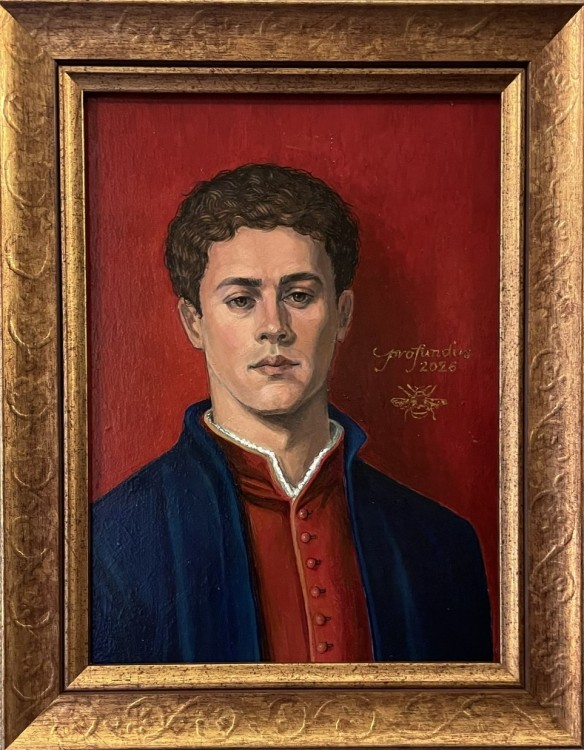
In this exhibition, I continue my exploration of the emotional landscape of men in the twenty-first century, drawing on the Quattrocento, the Italian Renaissance of the fifteenth century. These intimate paintings bring its visual language to young faces we might encounter every day.
Each face is a tronie, a study of character and expression drawn from the young male faces we encounter every day. They invite us to imagine the lives behind them. We recognise kindness, reserve, remoteness or dominance. Yet how much are we seeing, and how much are we supplying?
Writing about Katsushika Hokusai’s print series, Thirty six Views of Mount Fuji, art psychotherapist Dominik Havsteen-Franklin of Brunel University, reflects on how we interpret and become absorbed in the scenes before us. He describes mentalising, the way we draw on our own experience to imagine what others might be thinking and feeling. In looking at art, we give the people depicted an inner life, sometimes without noticing how much of ourselves we bring to that imagining.
What interests me is his invitation to remain curious rather than assume we know. A face can hold our attention and feel immediately familiar, while its inner life remains a mystery. That uncertainty also shapes how we interpret masculinity. The heels, cosmetics and elaborate wigs of European courts, the long hair and ornament of the counterculture, and the emphatically masculine styles of the 1970s reveal how differently men have expressed identity, belonging and power. What appears masculine in one time or place may be read quite differently in another.
I find myself asking: what do men feel required to show, and what do they learn to conceal?
When I look at faces painted five centuries ago, I am struck by expressions I feel I recognise. I cannot know what those young men thought or felt, yet something in their gaze reaches me. Perhaps I recognise an emotion. Perhaps I recognise something of myself.
With these paintings, I invite you to pause within that moment of recognition. To consider the person you imagine behind the face, and the experiences and assumptions you bring to looking.
I have called this exhibition Nothing Changes. But I offer that title as a question: beneath the changing appearances of masculinity, what persists?